







Business News
16 Minute


For decades, we’ve been told that getting an annual health check is one of the best things we can do for our long-term health.
It’s good advice.
Regular blood tests, blood pressure checks and conversations with your doctor can identify problems that might otherwise go unnoticed.
But healthcare is changing.
The way we measure, monitor and manage our health is evolving faster than ever before. As new technologies become available, one annual snapshot of your health is no longer enough to fully understand what’s happening inside your body.
The future of healthcare isn’t about checking your health once a year.
It’s about understanding it every day.
Your body changes constantly.
Sleep, stress, exercise, nutrition, hydration, hormones, medications and even the seasons can influence your health markers.
A blood test taken on one day in July tells us how your body looked on that particular day. It doesn’t necessarily tell us what happened three months earlier, or what might happen three months later.
Imagine trying to understand the entire stock market by looking at one day’s closing prices.
You’d miss the trends.
Health works the same way.
It’s the trends that matter.
Traditional health checks are excellent at identifying existing problems.
High cholesterol.
Elevated blood sugar.
Abnormal liver function.
Vitamin deficiencies.
But they’re less effective at identifying where your health is heading.
Two people may receive identical blood test results today, yet one may be on a path towards chronic disease while the other continues to improve.
The difference often lies in what’s happening between those annual appointments.
Today, many people wear devices that measure aspects of their health every minute of the day.
Heart rate.
Sleep quality.
Heart rate variability.
Exercise recovery.
Daily activity.
Stress levels.
Some people now monitor blood glucose continuously, while others regularly measure body composition or track nutrition in detail.
Individually, each piece of data tells a small part of the story.
Together, they create a much clearer picture of overall health.
One of the biggest limitations of traditional health assessments is that they’re often based on whether a result falls inside or outside a reference range.
If your cholesterol is “normal,” that’s reassuring.
If your blood sugar is “normal,” that’s also good news.
But health isn’t simply about being normal.
It’s about being optimal.
Someone can have blood results that fall within normal laboratory ranges while still showing gradual declines in cardiovascular fitness, metabolic health or recovery.
Those subtle trends often appear long before disease develops.
Modern medicine is becoming increasingly focused on prevention rather than treatment.
Instead of waiting until someone develops diabetes, cardiovascular disease or other chronic conditions, healthcare is shifting towards identifying risk much earlier.
This allows people to make small changes before those risks become major health problems.
Improving nutrition.
Increasing physical activity.
Optimising sleep.
Managing stress.
Reducing inflammation.
These are often far easier to address early than after disease has developed.
Healthcare now generates enormous amounts of information.
Pathology reports.
Wearable devices.
Medical history.
Lifestyle habits.
Body composition.
Medication history.
Family risk.
No individual can manually interpret all of these factors simultaneously.
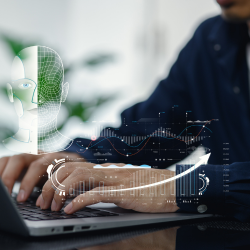
Artificial intelligence is beginning to help clinicians, doctors and healthcare professionals identify patterns across these different sources of information, allowing them to make more personalised and proactive recommendations.
Importantly, AI doesn’t replace medical professionals.
It gives them more information to support better clinical decisions.
Many people focus on individual results.
“What was my cholesterol?”
“What was my blood sugar?”
“What was my blood pressure?”
These numbers matter.
But no single measurement defines your health.
True health is the combination of hundreds of factors working together.
The future of healthcare is likely to move towards comprehensive health scoring, where multiple biomarkers, lifestyle behaviours and long-term trends are considered together rather than in isolation.
This provides a much more accurate picture of overall wellbeing.
Healthcare is moving away from reacting to illness and towards actively maintaining health.
Instead of asking, “Am I sick?”, people are beginning to ask, “How healthy am I today compared to six months ago?”
That’s a far more useful question.
It encourages continuous improvement rather than waiting for problems to appear.
Annual health checks remain incredibly valuable, and everyone should continue having regular conversations with their healthcare provider.
But they’re increasingly becoming the starting point rather than the complete picture.
As technology continues to evolve, we’ll have access to richer data, smarter insights and more personalised recommendations than ever before.
The goal isn’t simply to live longer.
It’s to understand our health well enough to make better decisions every single day.
Because the future of healthcare won’t be measured once a year.
It will be measured continuously.