







Branding
10 Minute


Australia’s energy transition is frequently discussed through individual technologies such as hydrogen, recycling, decarbonisation, and waste management. Far less attention is given to the systems-level challenge linking these domains into workable commercial infrastructure.
At the Australian Hydrogen Research Conference (AHRC) 2026, Caason Group, in collaboration with Innova Sierra, presented research led by Dr Bala S. Kumble, Group Head of Innovation and R&D. The presentation, titled Closed-loop hydrogen and biochar systems from agri-biomass and plastics, explores a modular systems architecture designed to convert distributed agricultural residues and waste plastics into high-purity hydrogen while stabilising carbon as biochar.
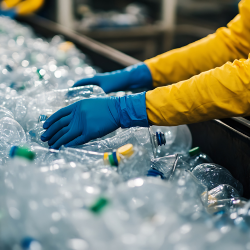
Dr Kumble’s research addresses a structural inefficiency that is often overlooked. Biomass and plastics are chemically complementary. Plastics generate hydrogen-rich volatiles during thermochemical conversion, while biomass provides a stable carbon matrix and naturally occurring mineral content that can assist catalytic processes. When co-processed under controlled conditions, these materials can enhance hydrogen yield, suppress undesirable by-products, and improve overall system efficiency.
Rather than treating agricultural waste, plastic waste, carbon emissions, and hydrogen production as separate infrastructure problems, the model proposed through Dr Kumble’s work examines how these streams can be managed within a closed-loop framework.
A central feature of the system is the integration of AI-driven digital-twin optimisation through the EAGLE platform. Real-time sensing, predictive modelling, and adaptive control allow the system to respond dynamically to variability in feedstock composition, moisture content, and operating conditions. This capability is particularly relevant for decentralised and field-scale deployment where inputs are inherently inconsistent.
Simulation and modelling outcomes derived from the research program indicate meaningful performance advantages under mixed-feedstock scenarios. Increasing biomass ratios improved hydrogen yield and reduced net CO₂ intensity, while AI-based optimisation further enhanced system stability and efficiency. These findings reinforce the importance of designing energy systems around real-world material flows rather than idealised laboratory inputs.
The broader implication is strategic. Australia already possesses substantial volumes of agricultural biomass residues and non-recyclable plastics. The constraint is not resource availability, but conversion design, logistics, and system integration.
Caason Group’s participation in AHRC 2026 reflects its long-standing focus on applied innovation and commercialisation pathways, particularly where waste streams, energy production, and carbon management intersect. The Group’s innovation initiatives, supported by its multidisciplinary R&D framework, prioritise technologies capable of operating under practical economic and industrial conditions.
For Craig Astill, Founder of Caason Group, the themes emerging from Dr Kumble’s research align with a consistent principle visible across Caason’s ventures: enduring value is created when inefficiencies are treated as design opportunities rather than structural limitations.
Hydrogen production, carbon stabilisation, waste utilisation, and digital optimisation are rarely independent problems. In practice, they are deeply interconnected.
As global energy systems continue to evolve, solutions capable of integrating multiple constraints into unified operational models are likely to define the next phase of industrial transition.
AHRC 2026 provides a timely forum for advancing this discussion.
Caason Group welcomes engagement with researchers, industry participants, and potential collaborators interested in validation, pilot deployment, and commercialisation opportunities.
Contact Us for more Information