






Creative
9 Minute


Healthcare generates more information than any individual clinician, researcher or policymaker could reasonably read in a lifetime. Studies, patient records, clinical guidelines, population data and new discoveries are expanding at extraordinary speed.
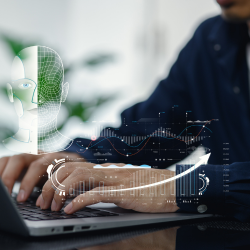
That is one reason artificial intelligence has such real potential in health. It can help people organise evidence, identify patterns, monitor change and prepare information for review.
But there is an important distinction that should remain clear.
AI can analyse evidence. It cannot own the decision.
In health, the quality of a decision depends on more than the volume of data available. It depends on context, values, individual circumstances, clinical experience and the ability to recognise uncertainty.
An AI system may be able to surface relevant research quickly. It may help a health service detect a trend, reduce administrative workload or support earlier intervention. Those are meaningful capabilities.
Yet none of them remove the need for accountable professionals and institutions to decide what the evidence means in the real world.
One of the most promising applications of health technology is not simply treating illness more efficiently after it appears. It is making it easier to identify risk earlier, understand the factors that influence health and give people better information before a problem becomes more serious.
That does not mean every person should be handed an automated answer. It means that patients, clinicians and health systems should have stronger tools for making sense of complex information together.
Preventative health becomes more useful when it is continuous, evidence-aware and connected to an appropriate care pathway.
For AI to be genuinely helpful in health, people need to understand its role. What information is being used? What are the limitations? When is a clinician involved? How is privacy protected? What happens when the system is uncertain?
These are not secondary questions. They determine whether a useful technology can be trusted.
The strongest health platforms will not present themselves as replacements for professional judgement. They will make professional judgement better informed, more timely and easier to apply at scale.
There is a risk that health technology becomes another layer between people and care. There is also an opportunity for it to do the opposite.
Used well, it can remove friction, help people prepare for better conversations and give clinicians more time to focus on the individual in front of them.
The future of healthcare will not be decided by whether AI can produce an answer. It will be decided by whether we build systems that use intelligence responsibly, preserve accountability and improve the human experience of care.
Contact Us for More Information.